
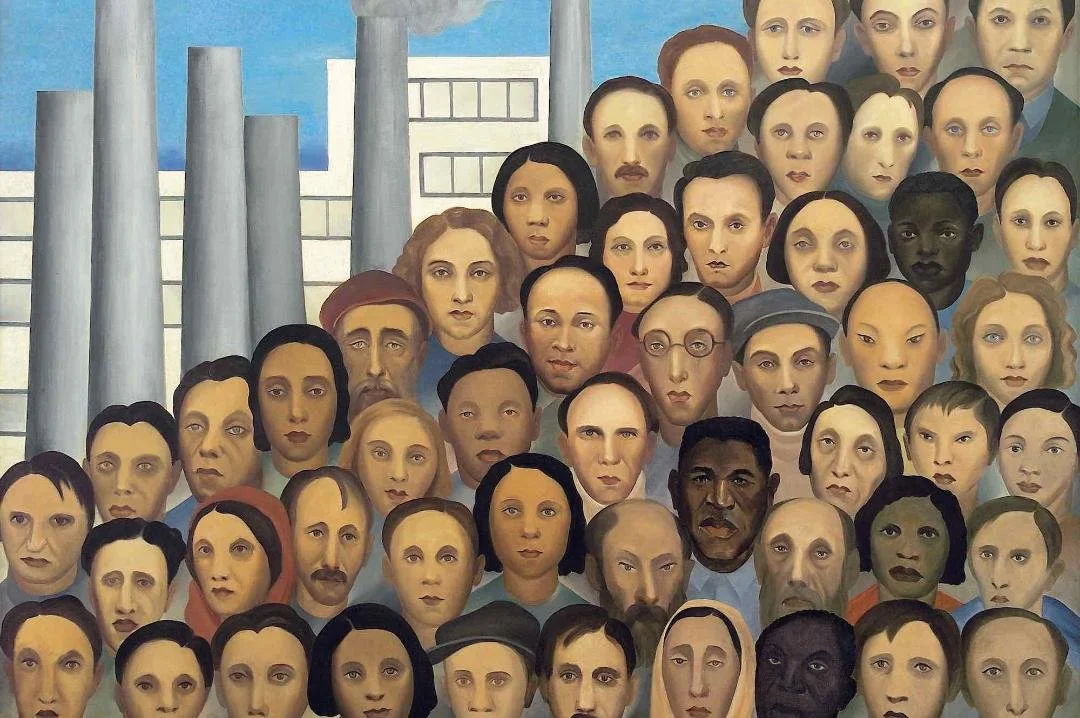
Tarsila do Amaral, Operários (Workers), 1933
International congress
Second International Meeting of Psychoanalysis in Psychiatry Section (PIP) of WPA
In Collaboration with Après-Coup Psychoanalytic Association NY
On the Discontents of Patients and Clinicians in Psychiatry Today: What Psychoanalysis Can Offer
June 6 – 7, 2026
Mount Sinai School of Medicine
Goldwurm Auditorium
Icahn Medical Institute, 1st floor
1425 Madison Ave., New York, NY
(corner of East 98th Street)
In-person and on Zoom
In our times, the field of psychiatry is confronted with unprecedented clinical difficulties and impasses. If, on the one hand, psychiatry has gained major scientific recognition, on the other, psychiatrists have become increasingly aware of the dangers of distancing from the clinical bases of their practice. Psychiatric practice has often been transformed into an exercise in applying standardized diagnoses, obligatory protocols, and ready-made treatments. It is no coincidence that this trajectory has been accelerated by the adoption of new technologies that make it appear as if the real presence of the clinician is superfluous and that the figure of the psychiatrist could become obsolete. Yet, these new technologies also present new possibilities. How can we make use of them while sustaining an ethics of subjective care?
We are interested in what psychoanalysis can offer to the discontents of patients and clinicians today. Some psychiatrists may believe that the sole contribution psychoanalysis can provide to psychiatry is a form of psychoanalytic psychotherapy. Yet, different forms of collaboration are both possible and necessary. For example, psychoanalysis can aid in considerations regarding the importance of the physical presence of the clinician, in measuring the adequate time necessary to the clinical encounter and developing the listening appropriate to the specificity of the patient’s suffering, which is always singular.
What can psychoanalytic experience teach us about why the patient’s speech must be at the center of all care and about the transferential relation between patient and clinician? What do we think should be the necessary formation for clinicians today and what kinds of policies need to be implemented in relation to it? What contributions might psychiatry propose for the advancement of today’s psychoanalytic research? How can the two disciplines cooperate in dealing with contemporary psychopathology and implementing new objectives and approaches?
We welcome psychiatrists, psychoanalysts, scholars, clinicians from all disciplines and other interested participants to join the discussion of how to create an ethical clinic for our time.
—
[Schedule in Progress]
Saturday June 6, 2026
8:30am: Registration
9:15am: Opening Remarks
9:30am – 11:15am
The Impact of Social Media on the Psyche and the Social Link
Moderator: Lillian Ferrari (NY)
Speakers: Jean Pierre Lebrun (Belgium), Vlad Novakovic (NY), Beverly Stoute (GA)
11:15am: Break
11:30am – 1:15pm
The Usage of AI in Psychiatry and in Psychotherapy
Moderator: Paola Mieli (NY)
Speakers: Yann Diener (France), Fabian Guenole (France), Luigi Janiri (Italy)
1:15pm: Lunch Break
3:00pm – 5:00pm
Psychiatry and Psychoanalysis in the Institution
Moderator: Ona Nierenberg (NY)
Speakers: Mario Colucci (Italy), Sarah Faitell (NY), Dominique Tourres Landman (France), Hachem Tyal (Morocco)
Sunday June 7, 2026
8:30am: Registration
9:15am: Opening Remarks — Maria Ammon (Germany)
9:30am – 11:15am
Psychoanalysis in Psychiatry: Present Challenges
Moderator: Paola Mieli (NY)
Speakers: Mario Eduardo Costa Pereira (Brazil), Marco Antonio Couthinio Jorge (Brazil), Hervé Granier (France), André Michels (Luxembourg)
11:15am: Break
11:30am – 1:15pm
Psychiatry, Psychoanalysis and Medications
Moderator: Michel Botbol (France)
Speakers: Swapnil Gupta (NY), Patrick Landman (France), Joanna Moncrieff (England), Thomas Shultz (Germany)
1:15pm: Lunch Break
3:00pm – 5:00pm
Psychiatric Training in Our Times
Moderator: Michel Botbol (France)
Speakers: Stathis Argyriou (NY), Anna Blech (NY), Jean Jacques Bonamour du Tartre (France), Juan Mezzich (NY), Alix Vicente Spadini (Brazil)
5:00pm: Break
5:15pm – 6:00pm: Closing Remarks
_________
Tickets: $195
Advanced Ticket: $150 (until May 1, 2026)
Après-Coup Psychoanalytic Association Members, AFs, and Yearly Participants: $100
Sponsors:
Après-Coup Psychoanalytic Association, NY
The Solomon and Gillespie Fund, NY
Scientific and Organizing Committee:
Maria Ammon (DE), Michel Botbol (FR), Mario Eduardo Costa Perreira (BR), Lillian Ferrari (NY), Fabian Guenole (FR), Hervé Granier (FR), Dusica Lecic Tosevski (SRB), Juan Mezzich (NY), Kareen Malone (GA), Paola Mieli (NY), Ona Nierenberg (NY), Vlad Novakovic (NY), Hachem Tyal (MA)
Local Coordinating Committee:
Ania Baumritter (NY), Lillian Ferrari (NY), Caroline Kasnakian (NY), Kareen Malone (GA), Paola Mieli (NY), Annie Muir (NY), Ona Nierenberg (NY)
Registration information to follow.