
2026–27 calendar of events
To download a pdf of the 2026-27 program, click here.

Signatures: Working with Autism—Isabelle Orrado and Jean-Michel Vives
Isabelle Orrado and Jean-Michel Vives propose an alternative to the prevailing treatments for autistic children. Rather than trying to suppress or modify the ”oddities” that autistic persons display, they argue that these peculiarities should be seen not as problems to be suppressed, but as attempts at relating to a world that is otherwise invasive and threatening.
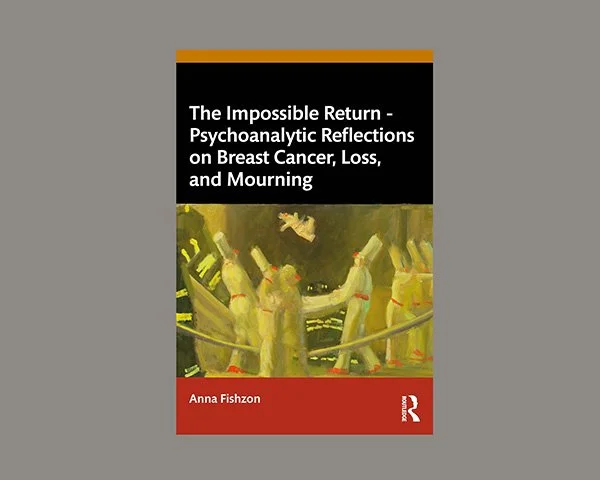
The Impossible Return: Psychoanalytic Reflections on Breast Cancer, Loss, and Mourning—Anna Fishzon
Through the author’s opening account of her own experience of breast cancer, mastectomy, and reconstruction, The Impossible Return offers a psychoanalytic meditation on other losses, unfinished mournings, and sublimations.

Transference and Its “Subjective Disparity”—Lillian Ferrari (first meeting)
Lacan opened his seminar of 1960-61 by saying he would deal with transference “in its subjective disparity,” and this reading group too will focus on the reasons transference cannot be an intersubjective relationship.
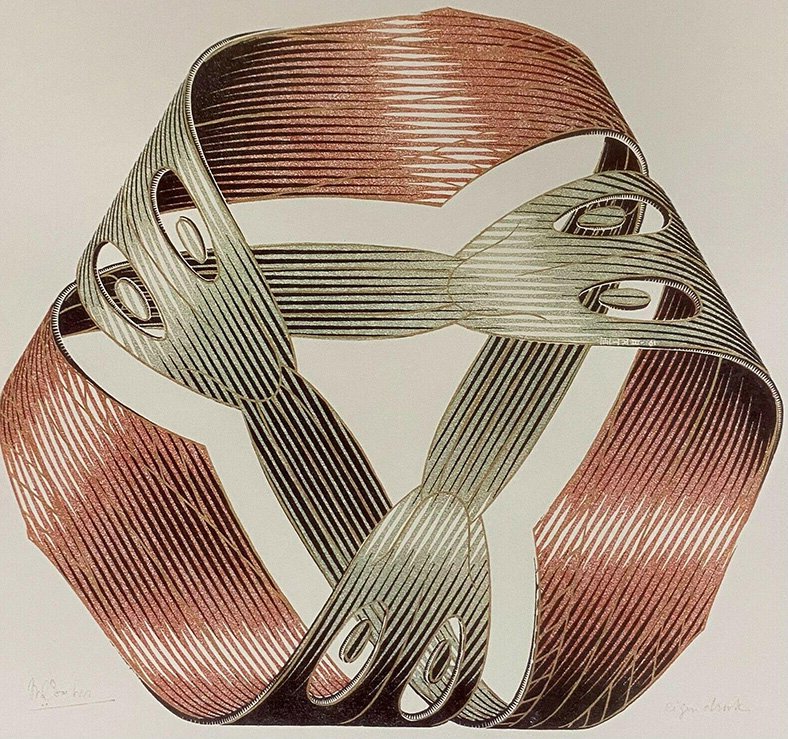
One Loop, or Two? On the Topology of the Möbius Strip—Mauro Milanaccio
For Lacan, the subject of the unconscious is structured like a Möbius strip: internal and external form a continuum. The Lacanian unconscious, “structured like a language,” is not, as Freud would have it, an inner domain; conscious and unconscious processes coexist on one and the same surface.
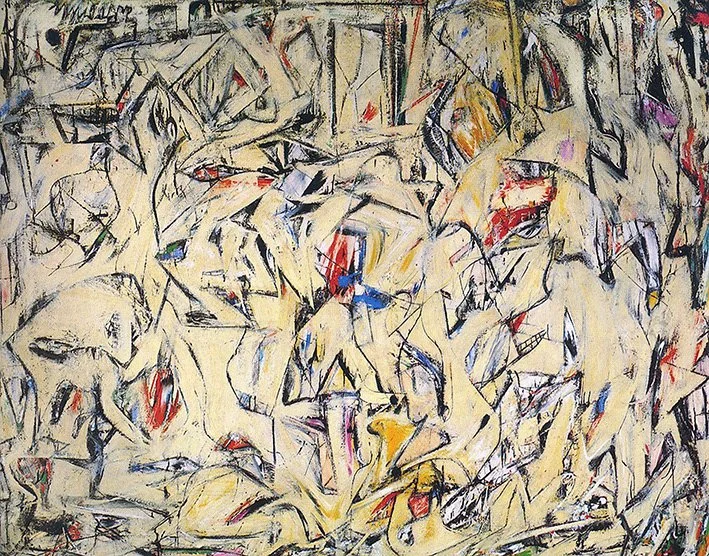
Spinoza: Ethics as Desire—Raffaella Colombo
The third part of Spinoza’s masterpiece Ethics deals with the “Origin and Nature of the Emotions.” In this crucial section the Dutch philosopher reveals, in geometric fashion (more geometrico), his largely revolutionary ideas on the mind-body relationship and on the role of “affects” in the formation of our identity and our moral sense.
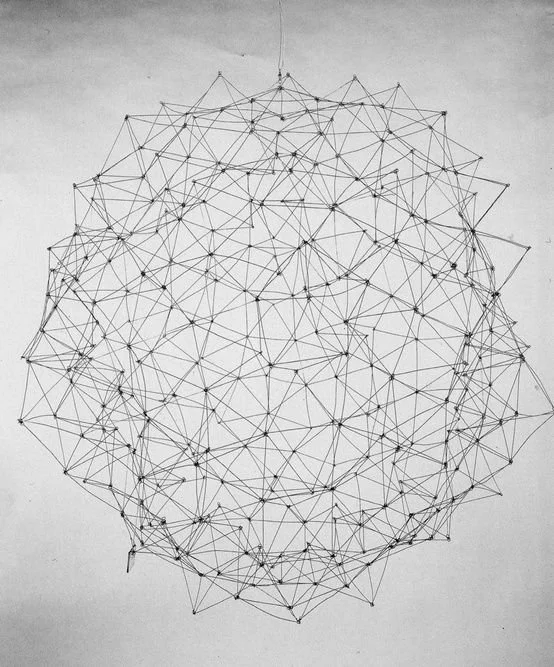
From Unfulfilled Promise to Cause-of-Desire—Paula Hochman
The verb “to be” tempts subjects to think they can attain the wholeness of Being. But the symbolic order is founded on lack, as subjects discover whenever the jouissance they do obtain falls short of the one they expected. One can subjectivize this disappointment in two ways: by neurosis, which clings to the Other’s broken promise of being; or by desire, which leads subjects to construct a singular object (what Lacan called object a) that brings them a surplus of jouissance.
On Childhood and Puberty: Working with Knots—Liliana Donzis
Clinical work with children allows us to establish the distinction between development, history, and the emergence of the subject — a difference that can be approached topologically. Studying the functions of symptoms, this workshop will address different structures and severe disorders, exploring the role of transference in the work with children.

On Clinical Work with Survivors—Paola Mieli
The assault on human dignity that occurs in hate crimes, and the bodily harm that most often accompanies it, silences speech. Clinical work faces the challenge of allowing a silenced voice to reemerge. The direction of the cure implies giving transferential space to such a voice, reconstituting a frayed narcissistic fabric and reknotting imaginary, symbolic and real — relaunching the phantasm.
The Analyst’s Transference—Alain Vanier
Nothing is more commonplace than transference in all its manifestations — love, hate and ignorance. And yet, for all its ubiquity, transference is the specific, fundamental tool of psychoanalysis. How can we situate and address it from the perspectives of both the analysand and the analyst?

Vivre à Bonneuil: A Documentary Screening with Clinical Discussion
In 1969 Maud Mannoni, one of France’s great child psychoanalysts, founded an experimental school in Bonneuil-sur-Marne, Paris. Sympathetic to the basic attitude of antipsychiatry but not its theory, Mannoni grounded her theory on psychoanalysis. Bonneuil welcomed children shut out from the school system as ‘maladjusted’: psychotic, autistic, or with ‘bad behavior’ problems, and treated them, reinstating them in a social environment.
Economics Is Political: Unpacking the Logic of Austerity: A Workshop in Two Parts (Part I)—Clara E. Mattei
Economics is sold as pure and apolitical: scientific, neutral, exact. Its true role is to convince us there’s no alternative to capitalism. We live under the dogma that austerity is necessary, unemployment natural, endless wars inevitable, central banks all-powerful, and those with most resources most worthy of rewards. Growth, inflation, unemployment are concepts to enforce market dependence, not freedom, disempowering us to shape the democratic decisions that govern our daily lives. Why should we accept this relatively young system that’s not scientific, natural, or inevitable — that is replaceable?

Fact in the Clinic and in Science—André Michels
For all their basic differences, clinical facts and scientific facts are remarkably close, and overlap in several areas. Both have a special relation to knowledge, with criteria based on validity rather than truth. As with science, the clinic’s kernel lies in repetition, revealing the real in all its variations. There, knowledge can be unknotted and reknotted differently. Yet, clinical or scientific discovery comes about as a result of an intrinsic logic and not by chance, within a mode of thought that reckons with each subjective position.
Clinical Group—Paola Mieli (first meeting)
For clinicians who are Participants, Analysands-in-Formation, or Members of Après-Coup.

Psychoanalysis in the Institution—Ona Nierenberg (first meeting)
This clinical group will be oriented to the unique challenges and opportunities we encounter in hospitals, clinics, prisons, treatment programs, schools, and other institutions. We will explore the often surprising possibilities the analyst has to create and sustain space for the singular even in settings dominated by claims to the universal. Open to those currently working clinically in or with institutions.
Mimicry and the Temptations of Space—Daniel Heller-Roazen
“The Mirror Stage” contains a reference to an article by Roger Caillois on mimicry. This presentation will explore the role of Caillois’s concept of mimicry and the “temptation of space” in Lacan’s writing, while bearing in mind the contrasting theory of the “mimetic faculty” Walter Benjamin developed in the same years.
Freud Reading Group—Mark Stafford and Martin Winn (first meeting)
We will continue our reading of Freud’s metapsychological papers and theoretical elaborations, paying attention to the significant decisions made when Freud’s concepts were translated into English. We will also read some of Lacan’s commentary on these papers.
On Clinical Work with Children—Angelo Villa (first meeting)
This year’s seminar will continue to focus on clinical work with children, returning to relevant psychoanalytic readings by way of clinical material brought by participants. Open to those who currently work with children.
The Algorithm of Transference: From Supposed Knowledge to the Object-Cause—Adriana Passini
This seminar will examine Lacan’s algorithm of transference and the transformation of the analytic relation it formalizes.
On Transference and Its Vicissitudes
Presentations by Après-Coup members and yearly participants.
dates to be announced

Memoria dell’utopia: Gramsci e noi—Angelo Villa
This biography of the revolutionary thinker Antonio Gramsci encompasses his Sardinian childhood marked by poverty and illness; his years of study, intellectual production and political activism; and his last years of imprisonment under Fascism which failed to deflect his fundamental drive toward the future.

On Child Psychoanalysis Today—Angelo Villa
Child psychoanalysis, ever since Freud’s time, has been a testing ground for our field, serving to question the basic premises of psychoanalysis. While inextricable from intergenerational history, it is also firmly marked by contemporary issues and new forms of symbolization. This workshop will focus on the analyst’s obligation to respond inventively to new symptoms in children and remain open to the unexpected.